WFA Engineering Delivers A Compact Cattle And Pig Slaughter Line To Nigeria
WFA Engineering has completed and handed over a cattle and pig slaughter line in Nigeria, and the first production shift already ran at the agreed design capacity of 200 cattle and 500 pig. The project is unusual in one respect: the client did not build a larger hall to fit the line. WFA Engineering designed the line to fit the hall the client already owned.
The starting point was a hard limit on floor area. A plant of this size would normally need two separate production chains, each with its own bleeding area, transfer points and carcass route, and the two chains together would have consumed the whole building, and a single cattle and pig slaughter line was the only arrangement that could fit. The engineering team at WFA Engineering took the opposite route and proposed one cattle and pig slaughter line that both species share, with species specific stations switched in and out of the main flow. The client accepted the concept at the layout review, and the detailed engineering of the cattle and pig slaughter line followed from there.
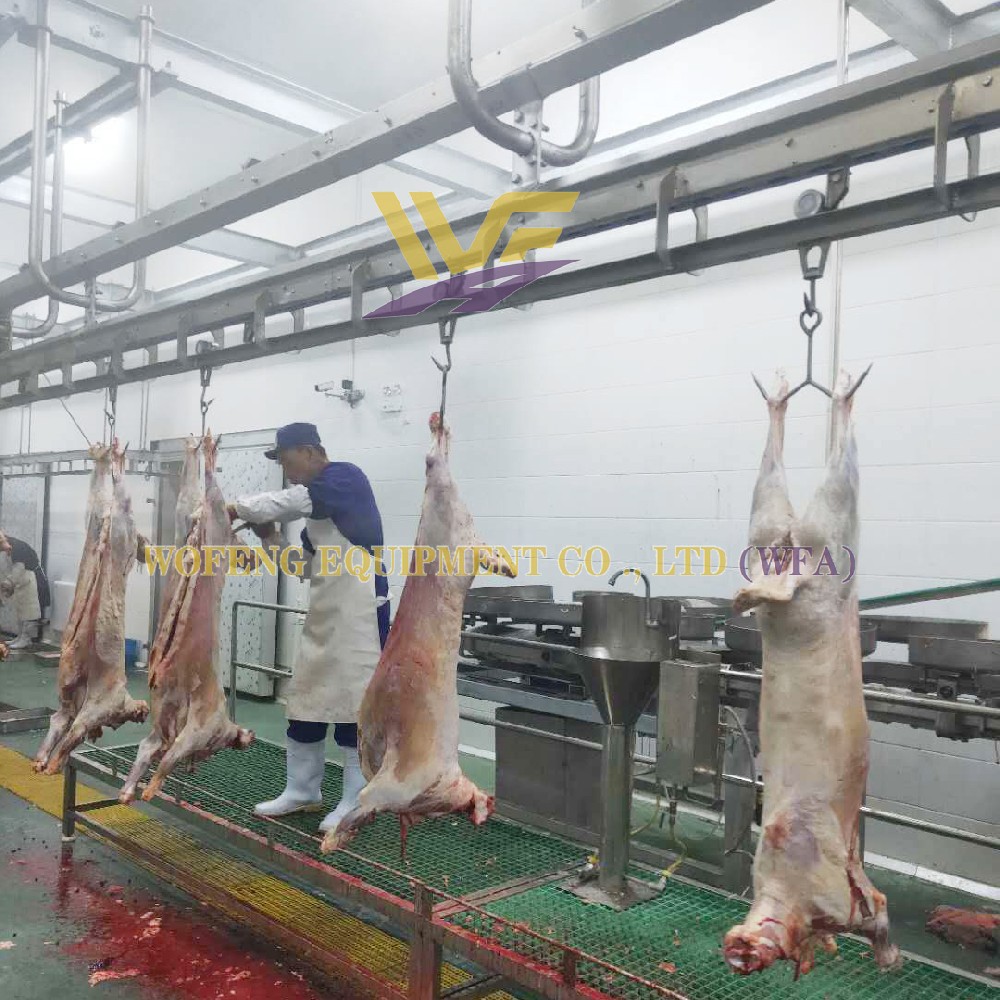
On paper the line is one system, and in production it runs in two modes. Cattle mode logs 200 head per shift and pig mode logs 500 head per shift, and the change between the two takes place between shifts rather than inside a running production window. Because both species pass through the same cattle and pig slaughter line, the washing and sanitation routine covers the whole hall in one sequence, which keeps the start of every shift predictable. In effect, the cattle and pig slaughter line changes its tooling rather than its structure. The overhead rail, the hooks and the bleeding stations were sized on the heavier cattle carcass as the design case, so the same structure carries pig with a wide margin of safety.
The layout packs reception and holding pens, stunning and restraint, bleeding, dehiding, evisceration, carcass splitting and inspection into a single compressed sequence, and the two species share the chilling room downstream. Anyone walking the hall can see where the cattle route branches and where the pig route rejoins, and that clarity is what makes a shared cattle and pig slaughter line practical rather than theoretical.
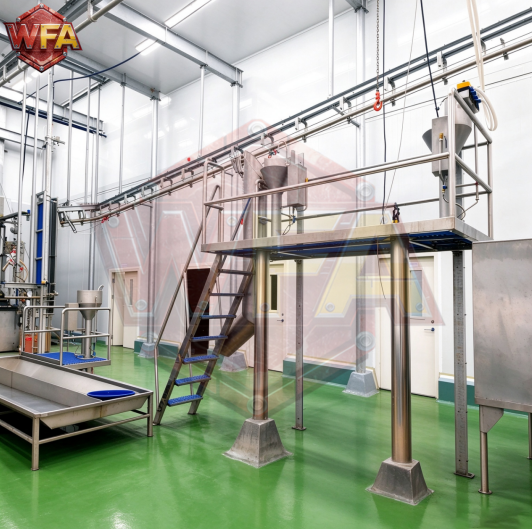
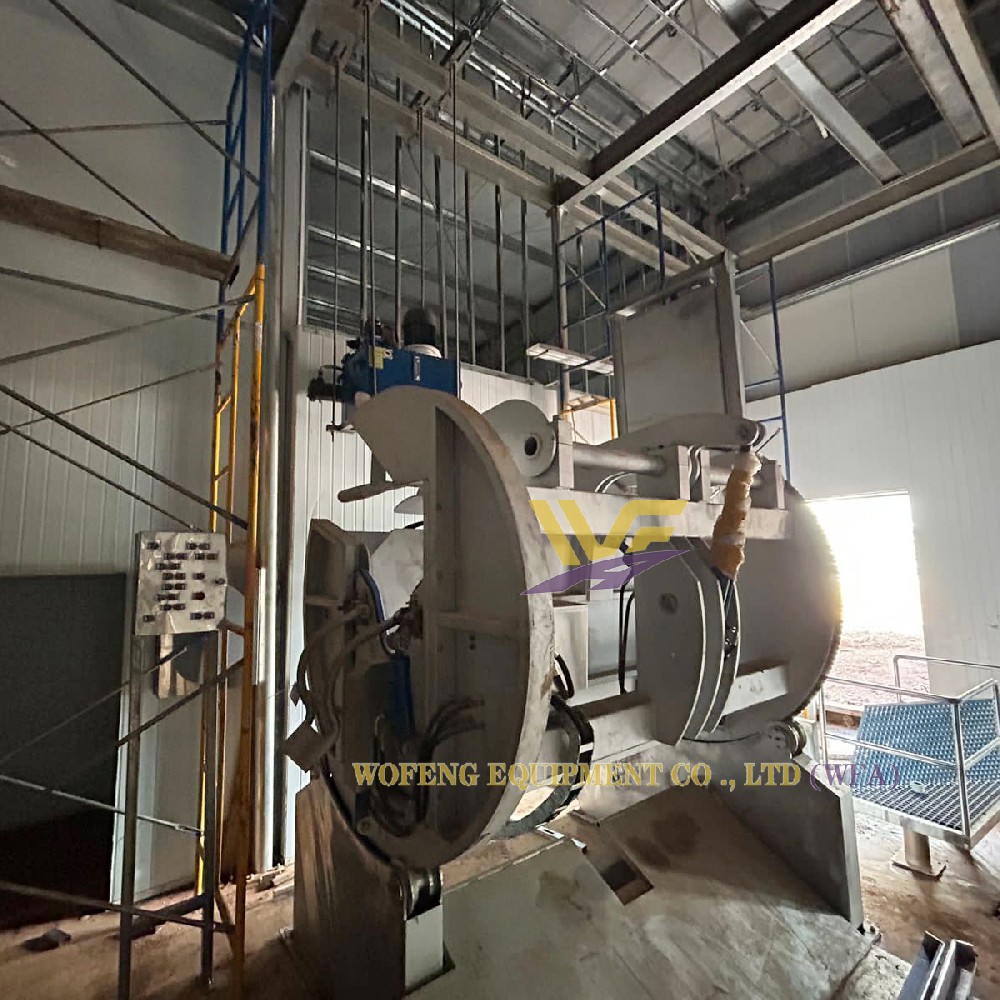
Design and manufacturing sit inside the same company. WFA Engineering runs its own drawing office, its own fabrication shop and its own site installation crews, so the space problem was solved at the drawing board instead of being discovered on site. On the cattle side, the restraint box, the bleeding platform and the overhead rail of the cattle and pig slaughter line form one continuous unit. Every cattle and pig slaughter line is assembled and dry run in the workshop before dispatch, with the rail system, the drives and the control panel tested as one assembly. Components that do not pass the trial run never leave the factory.
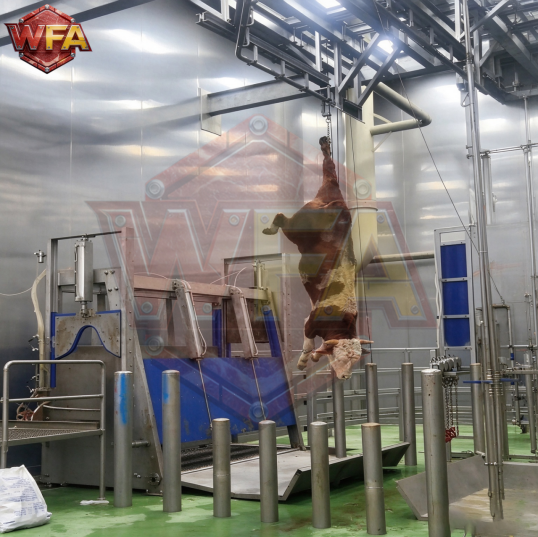
Hygiene was treated as a design constraint from the first sketch. Working surfaces are stainless steel, the floor falls to stainless drainage channels, wall panels are sealed and the ventilation path keeps condensation away from the product zone. The cattle and pig slaughter line also respects animal welfare practice and halal slaughter requirements, from the restraint box through the bleeding station, and the client supervisors reviewed those stations before shipment.
Delivery followed a pre assembly logic. The line was broken into transportable modules, packed with a matched spare parts kit, shipped to Nigeria and rebuilt inside the client hall by WFA Engineering crews working alongside local fitters. The pig side, with its own hooks, platforms and wash points, travelled as a separate module set and rejoined the cattle and pig slaughter line inside the hall. The installation window was tight because the client kept existing cold storage in service, and the module sequence was planned around that constraint rather than around the convenience of the installers.
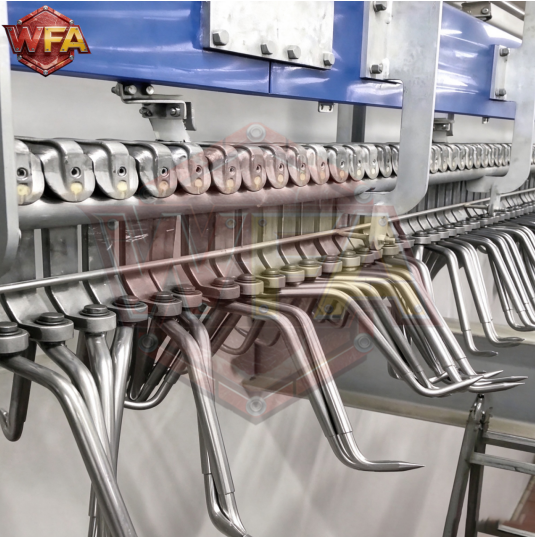
Commissioning ran in two stages. Cattle were processed first to prove the restraint, bleeding and dehiding stations under load, then the cattle and pig slaughter line was converted and pig were run to confirm the 500 head per shift target. Throughput was measured shift by shift, operators were trained at their own stations, and the client received the washdown schedule, the wear parts list and the maintenance manual with the handover. During the acceptance run the client confirmed satisfaction with the layout and with the capacity reached on both species .
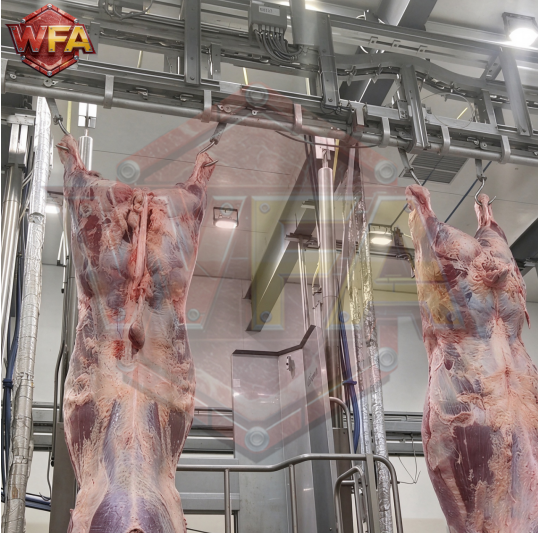
The project matters beyond one plant. Many meat processors in Nigeria and in neighbouring markets work in buildings raised for a different process, and those buildings cannot be extended, so the conventional two line answer simply does not fit. A shared cattle and pig slaughter line gives such processors a route to dual species output without new construction, and it is the kind of answer that comes from measuring the building first and designing second. That sequence is how WFA Engineering approaches every enquiry, whether the request covers one cattle and pig slaughter line or a complete plant.
Support does not stop at handover. WFA Engineering keeps a spare parts inventory for the cattle and pig slaughter line, offers remote guidance on the control system and schedules follow up visits to check rail wear, hook condition and drive alignment. Consumables and wear parts are listed with expected service intervals, so the client plans purchases instead of reacting to a breakdown in the middle of a shift.
Every plant carries at least one constraint that looks impossible from the outside, whether it is floor area, power supply, drainage or the shape of an existing hall. Tell us your needs and we will do everything in our power to solve the difficult parts of your project, from the first site survey to the last carcass on the rail. WFA Engineering builds systems for cattle, sheep, pig and poultry processing as well as cold chain equipment, and the engineering conversation starts with your building, not with our catalogue.